Solar inspection markets: site types and regions
Same drone, very different jobs. Who owns the array decides what evidence they need, and where it sits decides how often it needs flying. Three site types first, then the regions.
Rooftop, commercial, and utility-scale buy differently
These three buyers search differently, budget differently and care about different evidence. Treating them as one audience is why so much solar drone content converts badly.
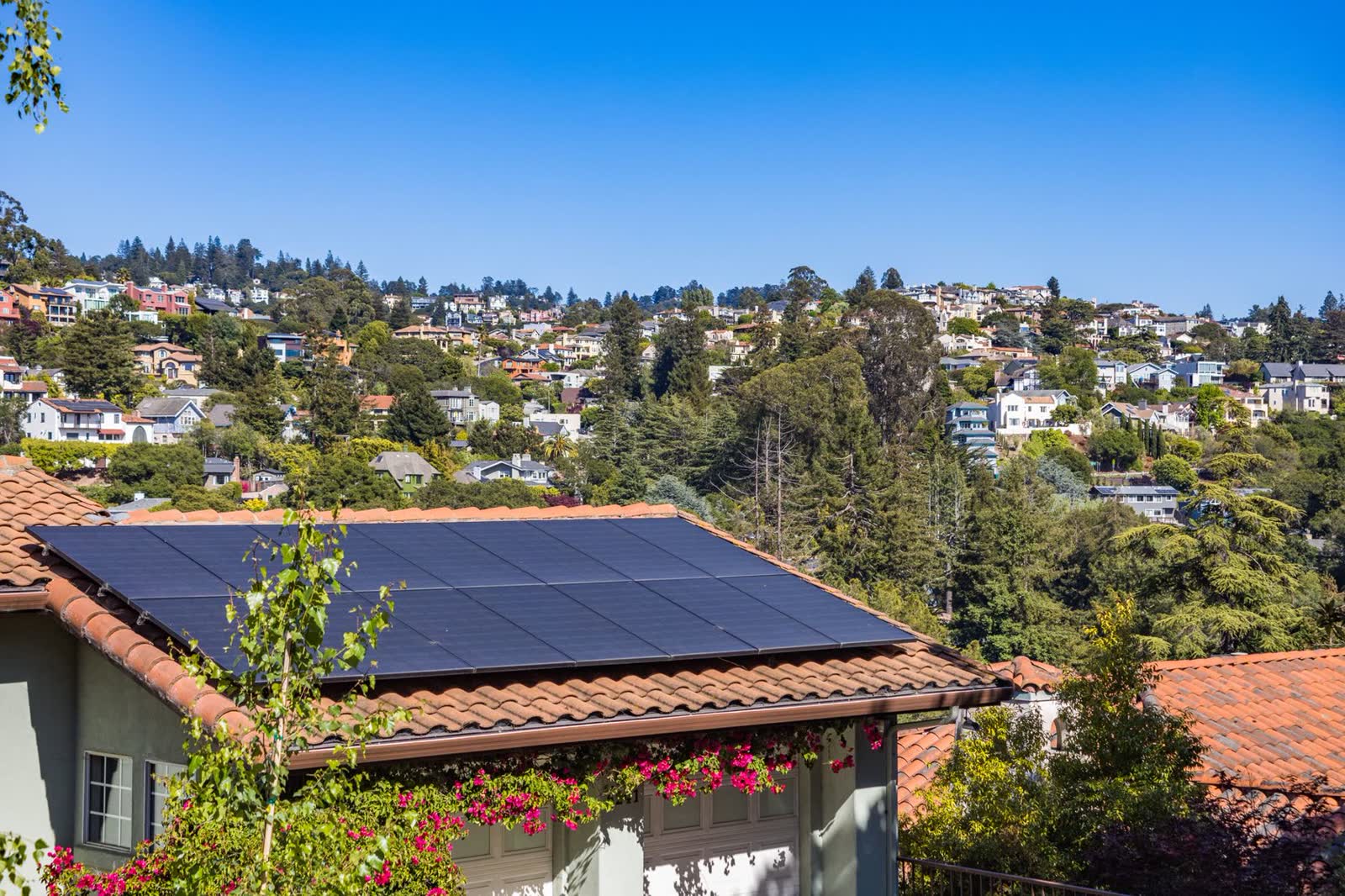
Residential and small rooftop
Decision driver: a bill that stopped dropping, or a roof that is about to be worked on. Single flights, fast turnaround, plain-language report. The real value is avoiding a roof walk and catching a string outage the homeowner never noticed.
Watch for: operations over people and near structures, and HOA or municipal privacy sensitivities.

Commercial and industrial
Decision driver: a performance guarantee, a lease obligation, or a facilities manager who owns uptime. Wants annual cadence, a repair path and documentation that satisfies the landlord and the insurer. Usually the easiest segment to turn into recurring work.
Watch for: tenant coordination, roof warranty terms, and who actually holds the O&M contract.

Utility-scale
Decision driver: the availability guarantee and the lender's reporting requirements. Needs megawatt-scale throughput, SCADA cross-referencing, module-level traceability across hundreds of thousands of serials, and integration with the asset management stack.
Watch for: data volume, as-built layout accuracy, and whether anomalies can be matched to string monitoring.
The same drone, very different jobs, state by state
A national page cannot answer the question an owner in Lubbock or Fresno or Buffalo is actually asking. Hail frequency, dust, snow load, humidity, state tax treatment, interconnection queue and inspector expectations all change the cadence and the economics. Smaller markets get the least coverage and have the fewest qualified operators, which is exactly why they are worth writing for.
West Texas is published. The other regions, and a United Kingdom hub, are planned.
West Texas — Lubbock, Midland, Odessa
Published
Hail alley, caliche dust, 100 °F+ derate, ERCOT interconnection, and a state property tax exemption that treats on-site generation very differently from a merchant solar farm.
Upstate New York
Snow load and ice shedding, short winter capture windows, NYSERDA program structure, and community solar portfolios of many small sites instead of one big one.
Central Valley, California
Agricultural dust and smoke season, Rule 21 interconnection, agrivoltaic installations, and wildfire-driven soiling that breaks calendar-based cleaning schedules.
Gulf Coast — Louisiana and Mississippi
Hurricane season inspection surges, humidity-driven connector corrosion, post-event insurance documentation, and a thin local operator market.
High Desert — New Mexico and Arizona
Soiling is the dominant loss mechanism, water for cleaning is scarce and expensive, and the cleaning-versus-loss calculation is the whole conversation.
Upper Midwest — Minnesota and the Dakotas
Bifacial snow albedo gains, extreme cold payload limits, short flying season, and a long distance between qualified thermographers.
United Kingdom
A separate hub under /uk/, written against UK rules and UK conditions rather than translated from the US pages.
Hail load by state, top twelve
Installed utility-scale solar joined to NOAA hail reports of one inch or larger, 2024 to 2025. The bar is the hail count. Texas carries 23,033 MW-AC and 2,687 reports.
- TX23,033 MW-AC2,687 hail reports
- IL3,216 MW-AC604 hail reports
- CO2,364 MW-AC750 hail reports
- FL11,622 MW-AC126 hail reports
- NC6,697 MW-AC203 hail reports
- GA5,364 MW-AC206 hail reports
- OH4,090 MW-AC263 hail reports
- WI2,340 MW-AC439 hail reports
- MO915 MW-AC967 hail reports
- IN3,762 MW-AC227 hail reports
- MN1,606 MW-AC495 hail reports
- VA4,710 MW-AC144 hail reports
Source: USGS/LBNL USPVDB v4.0 and the NOAA Storm Events Database. Ranking only, not a dollar figure; hail reports depend on spotters, so empty country is undercounted. Read the analysis or open the JSON.